How to choose the right plastic sheet for large, custom vacuum-formed parts
In heavy-gauge thermoforming — where sheet thicknesses range from 2 mm to 12 mm and part dimensions can exceed 5000 × 2500 mm — material selection is not just a resin question. It determines whether a part can be formed at scale, whether it will hold its shape in service, and whether the finish will survive installation.
A 3 mm ABS panel that works perfectly as an indoor machine cover may crack in an outdoor charging cabinet within two years. A transparent retail display cover and a transparent safety guard may look identical, but one is driven by optical quality while the other must survive impact.
This guide walks through the most common thermoforming materials, how they behave under heat and vacuum, and what to consider before approving a sheet grade for production.
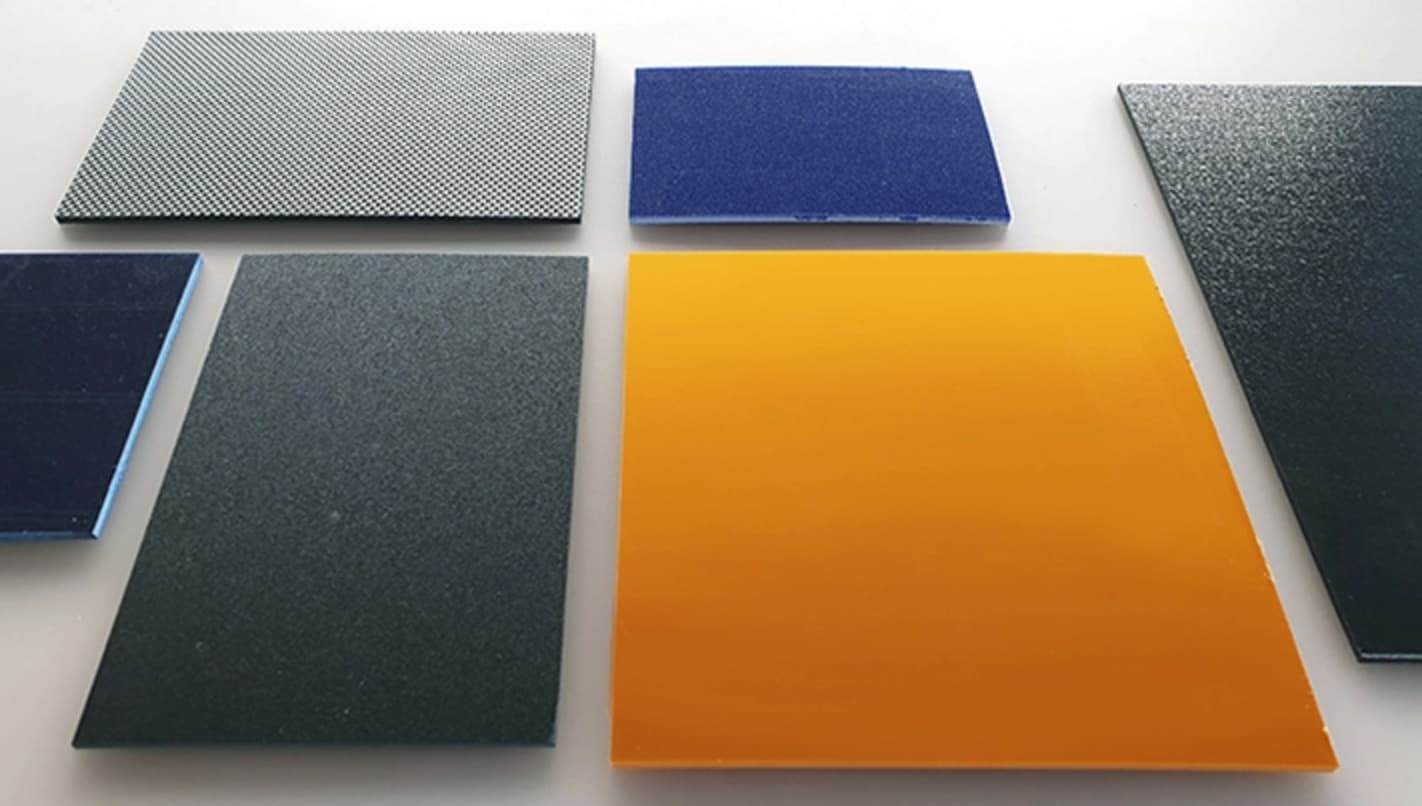
The Common Thermoforming Materials at a Glance
| Material |
Key Traits |
Best For |
Watch Outs |
| ABS |
Impact-resistant, paintable, easy to form |
Indoor housings, automotive trim, appliance panels |
UV degradation outdoors unless painted or capped |
| HIPS |
Cost-effective, easy to form, good print surface |
Display trays, inserts, low-duty covers |
Brittle, poor chemical resistance, low UV stability |
| PETG |
Crystal clear, chemical-resistant, good draw |
Transparent covers, medical trays, display cases |
Softer than PC, can scratch, not ideal for high-heat |
| PC (Polycarbonate) |
Unbreakable, heat-resistant, high impact |
Safety guards, high-heat enclosures, structural parts |
Harder to form, can stress-crack with certain chemicals, yellows with UV |
| PMMA (Acrylic) |
Glass-like clarity, UV-stable, excellent finish |
Retail displays, signage, outdoor transparent parts |
Brittle compared to PC, higher forming temperatures |
| PP / PE |
Food-safe, lightweight, chemical-resistant |
Food trays, chemical liners, washable components |
Difficult to bond, poor surface finish, high shrinkage |
| PVC |
Rigid, chemical-resistant, good texture |
Rigid packaging, industrial trays, flame-rated sheet |
Environmental concerns in some markets, can emit HCl when heated |
Material Behavior in Thermoforming: What Actually Happens
When a plastic sheet is heated and drawn over a mold, it doesn't just take a shape — it redistributes its mass. Material that starts at uniform thickness in the flat sheet becomes thinner in deep-draw corners, sidewalls, and complex features.
This means:
- A 4 mm sheet can thin to 1.5 mm at a sharp corner after forming
- Wall thickness distribution depends on draw ratio, corner radius, plug assist design, and forming temperature
- Two parts made from the same sheet grade can have very different local strength
Forming behavior by material:
| Material |
Drawing Depth |
Forming Temperature |
Shrinkage |
Texture Reproduction |
| ABS |
Moderate–Deep |
140–180°C |
Moderate |
Good |
| HIPS |
Moderate–Deep |
140–170°C |
High |
Good |
| PETG |
Moderate–Deep |
140–175°C |
Low |
Very Good |
| PC |
Moderate |
180–220°C |
Moderate |
Excellent |
| PMMA |
Shallow–Moderate |
160–200°C |
Moderate |
Excellent |
| PP/PE |
Shallow–Moderate |
170–210°C |
High |
Fair |
| PVC (Rigid) |
Shallow–Moderate |
150–170°C |
Low |
Good |
Industry Application Guide: Starting Material Recommendations
1. Automotive & EV Components
Common parts: Interior trim, dashboard covers, exterior panels, EV charging housings, roof boxes, mobility body panels
Recommended starting points:
- ABS for painted interior trim — good balance of toughness, surface finish, and cost
- PC/ABS blend when heat resistance or impact performance is critical
- ABS/ASA co-extrusion for unpainted exterior panels — the ASA cap layer provides UV and weathering resistance over an ABS body
- PP/TPO for low-density or chemical-resistant applications
Confirm before selecting:
- Interior vs. exterior position
- OEM flammability, fogging, or chemical requirements
- Target service life and installation climate
- Color, grain, and gloss standards
- Minimum formed wall at critical mounting points
2. Industrial & Machinery Housings
Common parts: Machine enclosures, control panels, access covers, guards, equipment shells
Recommended starting points:
- ABS as the workhorse for indoor painted or textured machine housings
- PC/ABS near heat sources or where impact duty is higher
- PC for transparent safety guards — but verify chemical compatibility and mounting stress
- HIPS for low-duty internal liners where cost matters more than longevity
Confirm before selecting:
- Continuous and peak operating temperatures
- Oil, coolant, and cleaning chemical exposure
- Impact level and safety role
- Access frequency and fastening method
- Required stiffness at minimum wall
3. Medical & Healthcare Equipment
Common parts: Diagnostic housings, equipment covers, cart panels, transparent guards, device enclosures
Recommended starting points:
- ABS for painted indoor equipment housings — good surface quality and easy to clean
- PC/ABS when flame rating or impact performance is required
- PC for transparent protective guards and impact-critical windows
- PETG for clear covers requiring deep draw or fine detail — verify sterilization method
Confirm before selecting:
- Exact cleaning chemicals and contact time (disinfectants can crack some plastics)
- Sterilization method if applicable (autoclave, UV, chemical)
- Flame or electrical requirements
- Patient-contact or food-contact status